

Banks scrap RM1 interbank ATM fee from July, giving Malaysians unlimited free withdrawals nationwide
- Details
- Category: Isu Kewangan
- Hits: 123
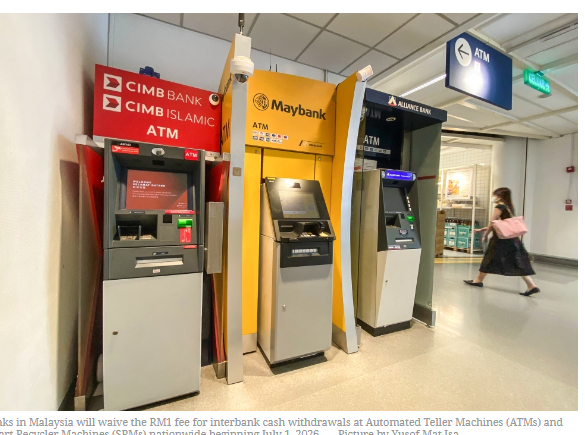 KUALA LUMPUR, June 15 — Banks in Malaysia will waive the RM1 fee for interbank cash withdrawals at Automated Teller Machines (ATMs) and Smart Recycler Machines (SRMs) nationwide beginning July 1, 2026.The Association of Banks in Malaysia (ABM), Association of Islamic Banking and Financial Institutions Malaysia (AIBIM), and Association of Development Finance Institutions of Malaysia (ADFIM) said the initiative, undertaken with Payments Network Malaysia Sdn Bhd (PayNet), would allow debit cardholders to make unlimited free withdrawals at more than 14,000 machines nationwide.
FOMCA sokong cadangan wajib pemasangan dashcam kenderaan persendirian
- Details
- Category: Keselamatan Asas
- Hits: 162
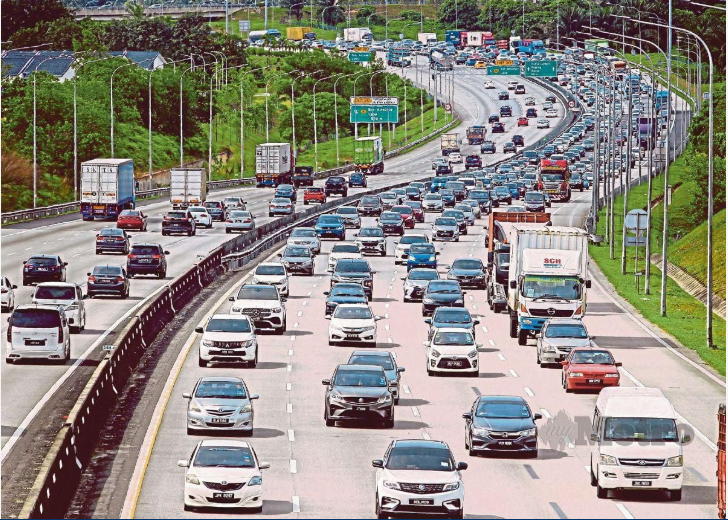 Kuala Lumpur: Gabungan Persatuan-Persatuan Penguna Malaysia (FOMCA) menyokong cadangan mewajibkan atau menggalakkan pemasangan kamera papan pemuka atau dashcam dalam kenderaan persendirian.
Ketua Pegawai Operasi FOMCA Nur Asyikin Aminuddin berkata, peranti itu kini menjadi keperluan susulan peningkatan mereka yang memandu secara berbahaya.
"(Cadangan ini) boleh dipertimbangkan kerana dashcam sudah menjadi keperluan memandangkan semakin ramai yang memandu secara melulu, agresif dan kurang sabar di jalan raya, sekali gus meningkatkan risiko kemalangan serta pertikaian apabila berlaku kemalangan," katanya kepada Bernama.
Read more: FOMCA sokong cadangan wajib pemasangan dashcam kenderaan persendirian
Fomca backs mandating dashcams in private vehicles
- Details
- Category: Keselamatan Asas
- Hits: 148
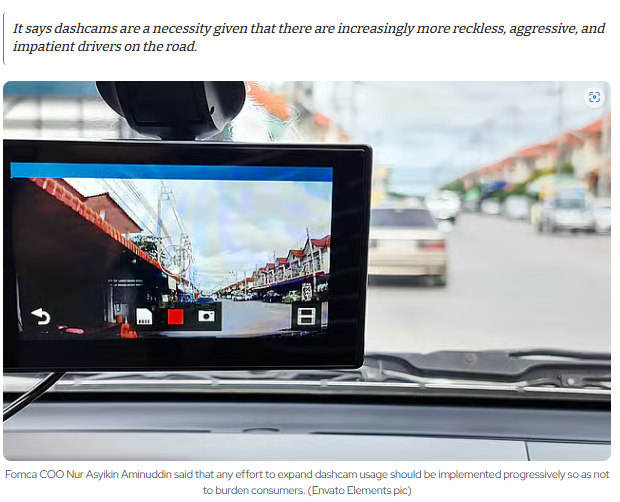
PETALING JAYA: The Federation of Malaysian Consumers Associations (Fomca) says it is in favour of any move to encourage or mandate private vehicles to install dashboard cameras, or “dashcams”.
Its chief operating officer Nur Asyikin Aminuddin stated that the device is now seen as a necessity following the rise in dangerous drivers, Bernama reported.
“It is worth considering because dashcams have become a necessity given that there are increasingly more reckless, aggressive, and impatient drivers on the road. This, in turn, increases the risk of accidents and disputes when incidents occur,” she was quoted as saying.Such a policy would also complement the government’s efforts to foster a more prudent driving culture through incentives for drivers with clean records, including additional discounts on insurance premiums.
According to Nur Asyikin, dashcam footage can serve as objective evidence to protect law-abiding road users.
Read more: Fomca backs mandating dashcams in private vehicles
Konflik Global Ancam Biaya Hidup di Malaysia, Pakar Minta Warga Tak Panik Belanja
- Details
- Category: Berita Pengguna
- Hits: 0
Konflik global dan gangguan rantai pasok memang berada di luar kendali masyarakat biasa, tetapi para ahli menilai rumah tangga tetap bisa mengambil langkah sederhana agar tekanan terhadap keuangan keluarga tidak semakin berat.
Para ekonomi dan pemerhati konsumen di Malaysia mengingatkan masyarakat agar tidak panik menghadapi potensi kenaikan harga barang akibat konflik global maupun gangguan pasokan.
Mereka menilai aksi borong barang secara berlebihan justru dapat menciptakan lonjakan permintaan sementara yang tidak sehat dan mendorong kenaikan harga dalam jangka pendek.
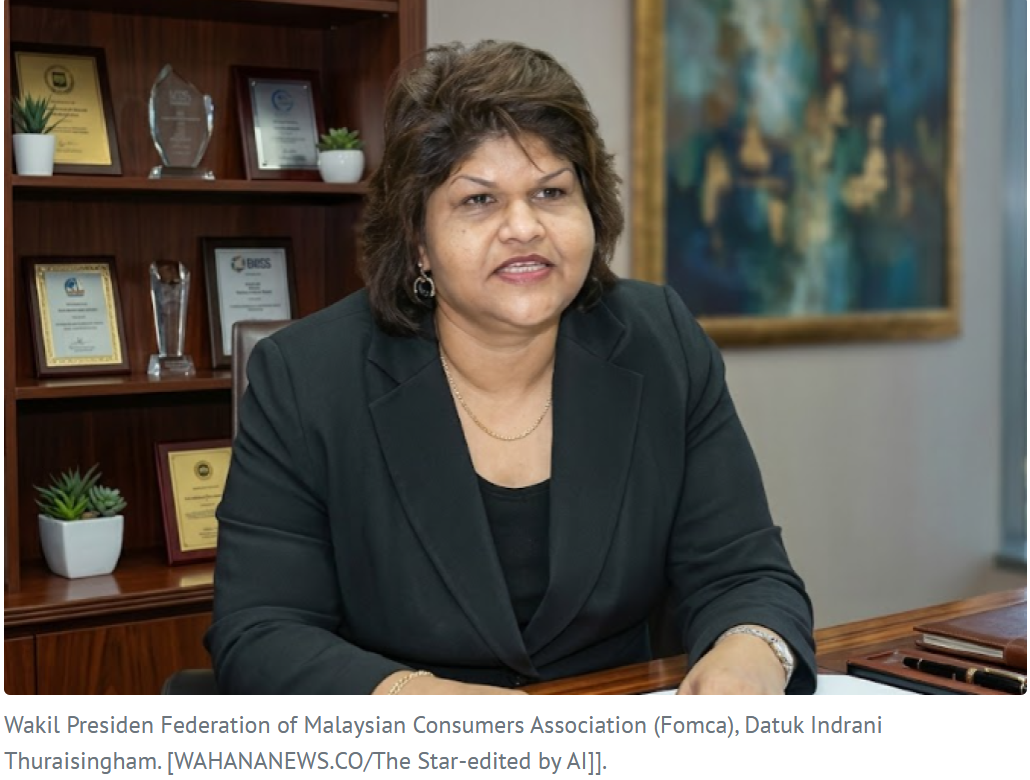
“Panic buying hanya akan menghasilkan lonjakan buatan pada permintaan jangka pendek yang bersifat lokal dan memicu kenaikan harga segera,” kata Wakil Presiden Federation of Malaysian Consumers Association (Fomca), Datuk Indrani Thuraisingham.
Konflik Global Ancam Biaya Hidup di Malaysia, Pakar Minta Warga Tak Panik Belanja - Wahana News
Read more: Konflik Global Ancam Biaya Hidup di Malaysia, Pakar Minta Warga Tak Panik Belanja
Don’t panic, but be prudent. And buy local?
- Details
- Category: Berita Pengguna
- Hits: 0
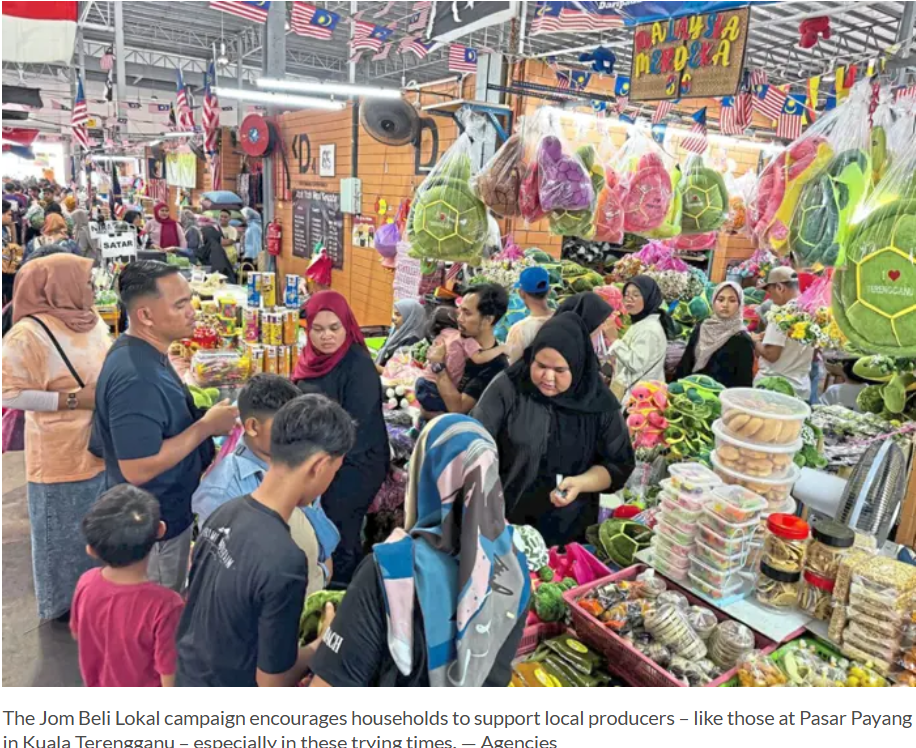
GLOBAL conflicts and supply disruptions may be beyond the control of ordinary Malaysians, but there are still practical steps they can take to reduce the impact on their household finances, say experts.
But first, they stress, avoid panic buying.
Panic buying will only result in artificial spikes in localised short-term demand which will trigger immediate price increases, says Federation of Malaysian Consumers Association (Fomca) vice-president Datuk Indrani Thuraisingham.
Enhance fraud detection
- Details
- Category: Isu SCAM
- Hits: 173
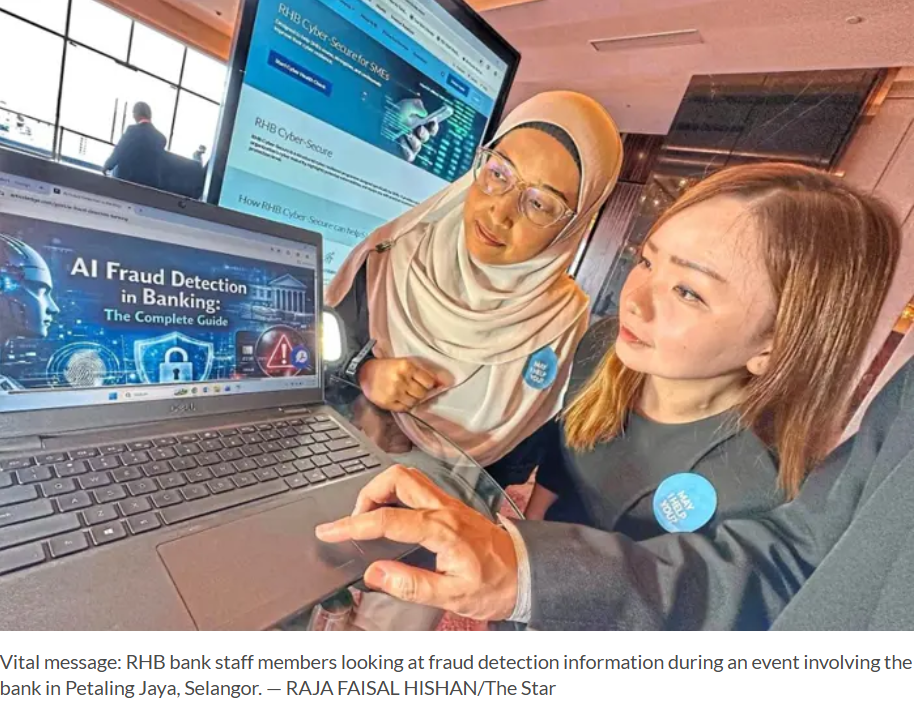
KUALA LUMPUR: Banks and financial institutions are facing growing scrutiny on whether measures are in place to detect suspicious online transactions before customers fall victim to scams.
The issue has come under renewed focus following a Sessions Court ruling ordering a bank to compensate a customer RM166,000 over suspicious online transactions that went undetected.
As scams evolve, banks are facing heightened urgency to identify unusual transaction patterns and act fast, particularly as fraudsters exploit human behaviour and then move in to breach banking systems.
https://www.thestar.com.my/news/nation/2026/05/22/enhance-fraud-detection
TAKTIK PEMASARAN AGRESIF DI PUSAT KESIHATAN DAN KECANTIKAN: APA YANG PENGGUNA PERLU TAHU
- Details
- Category: Isu SCAM
- Hits: 149
Peningkatan penggunaan Buy Now Pay Later (BNPL) dan pelan ansuran telah mengubah cara pengguna mendapatkan perkhidmatan kecantikan dan penjagaan diri. Walaupun sistem ini kelihatan lebih fleksibel dan mampu milik, ia turut menimbulkan kebimbangan berkaitan taktik jualan agresif, psikologi pengguna, serta komitmen kewangan jangka panjang.
Dalam sesetengah pusat perniagaan kesihatan dan kecantikan, strategi jualan sering direka untuk mewujudkan perasaan terdesak melalui tawaran masa terhad, pakej eksklusif dan sesi konsultasi yang meyakinkan. Pengguna kadangkala berasa tertekan untuk membuat keputusan dalam masa yang singkat walaupun pada awalnya masih ragu-ragu. Tekanan ini biasanya berlaku secara halus melalui mesej seperti “tawaran sekali seumur hidup” atau amaran bahawa mereka akan kehilangan manfaat jika tidak mengambil pakej tersebut. Ini boleh menjejaskan keupayaan pengguna untuk membuat keputusan yang benar-benar bermaklumat.
Read more: TAKTIK PEMASARAN AGRESIF DI PUSAT KESIHATAN DAN KECANTIKAN: APA YANG PENGGUNA PERLU TAHU
AGGRESSIVE SALES IN WELLNESS AND BEAUTY CENTRE: WHAT CONSUMERS SHOULD KNOW
- Details
- Category: Isu SCAM
- Hits: 186
The growing popularity of Buy Now Pay Later (BNPL) schemes and instalment-based payment options has changed how consumers access beauty and personal care services. While these payment models appear to offer flexibility and affordability, they also raise concerns involving aggressive sales tactics, consumer psychology, and long-term financial commitment.
In some beauty and wellness centre, sales strategies are designed to create urgency through time-limited offers, exclusive packages, and persuasive consultations. Consumers may feel pressured to make immediate decisions, even when they initially express hesitation. This pressure is often subtle rather than direct, relying on psychological cues such as claims that a deal is “once in a lifetime” or that missing it means losing valuable benefits. As a result, consumers may not always make fully informed or rational decisions.
Read more: AGGRESSIVE SALES IN WELLNESS AND BEAUTY CENTRE: WHAT CONSUMERS SHOULD KNOW
Buy Now, Pay Later - Nationwide Tsunami
- Details
- Category: Isu Kewangan
- Hits: 256
Be it ShopeePay Later, Atome, or Grab PayLater; an observing eye could notice that Buy Now, Pay Later (“BNPL”) schemes have steadily gained traction among the younger generation. BNPL schemes provide a form of escapism and a second bite at the cherry for many young people seeking to sustain a particular lifestyle despite financial constraints.
Recently, BNPL schemes have even garnered legislative attention through the passing of the Consumer Credit Bill 2025. During the tabling of the Bill, Deputy Finance Minister Lim Hui Ying revealed that BNPL transaction values had surged by more than 30%, increasing from RM7.1 billion in the second half of 2024 to RM9.3 billion in the first half of 2025.
- Scams – Focusing on Laws and Technology is not Enough
- Court holds bank liable for failing to monitor customer’s accounts
- Thought impact: Building consumer resilience together
- Addressing Medical Inflation in Malaysia
- PRESS RELEASE: MOH’S PROPOSED PATENT LINKAGE GUIDELINE RISKS HIGHER MEDICINE PRICES AND DELAYED ACCESS
- PRESS RELEASE: ON THE PROPOSED GUIDELINES ON IMPLEMENTATION OF PATENT LINKAGE FOR PHARMACEUTICAL PRODUCTS IN MALAYSIA
- Chief Statistician urges Malaysians to rebuild discipline, warning QR payments make saving harder than ever
- Malaysians paying twice for poor waste management, says researcher
- BNM fines Zurich units RM1.56mil over sanctions breaches
- Do Consumers Need Protection in the Market?
Page 1 of 7